
You walk the job, talk it through with the customer, give them a verbal quote, and shake hands. Many good service businesses were built exactly that way, and it works because people trust you.
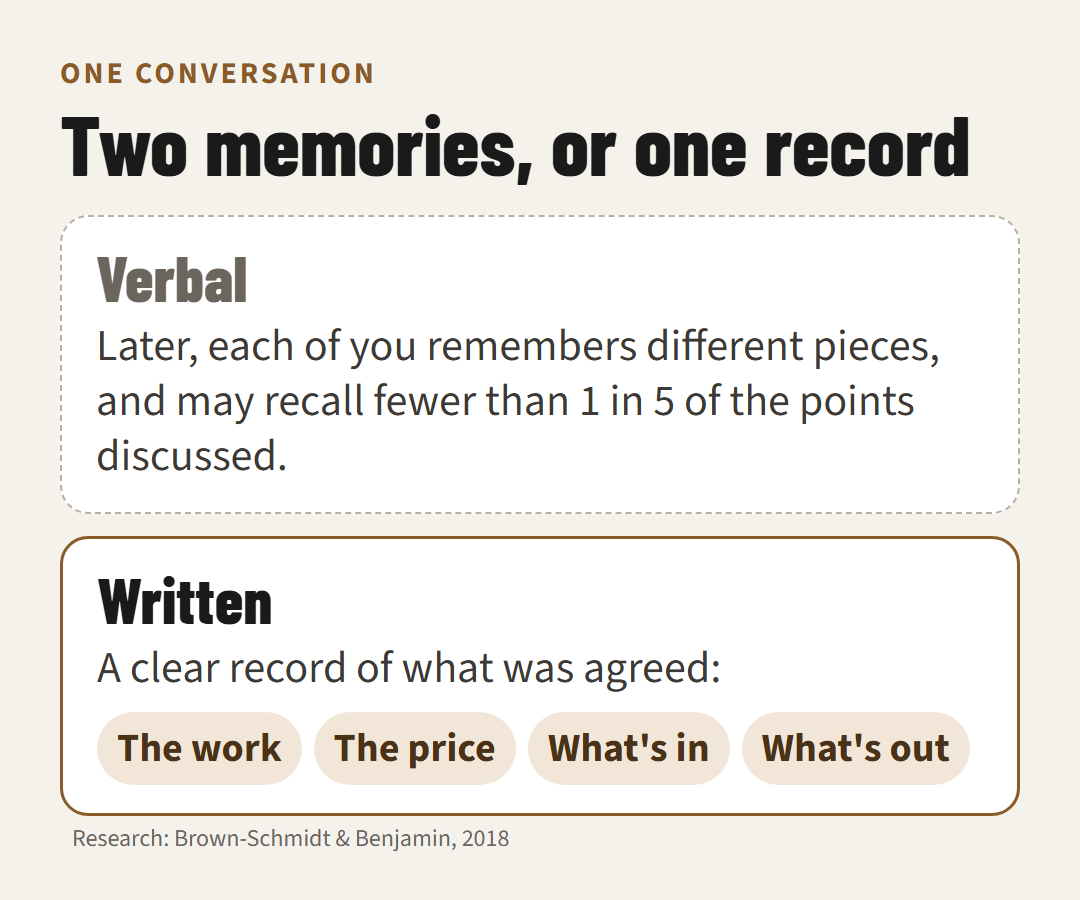
A handshake carries trust, but it can’t hold the details. Research on how people remember conversations finds that, after even a short period of time, people may remember fewer than one in five of the specific points that were discussed. We tend to remember what we said better than what we heard. Two honest people can walk away from the same conversation with two different jobs in mind.
The best of both? Keep the handshake, and put it in writing, with a written offer (many call it a written quote). It doesn’t replace your word. It shows the customer you’ll stand behind it.
Introduce yourself and your work
Before the work starts, the customer has very little to judge you by: how you showed up, how you talked about the job, and what you put in front of them. A clear written offer is the first piece of your work they can see, and it demonstrates your organization and professionalism. If it’s clear and complete, it builds confidence that the job will go the same way.
It also shows the work behind the price. Researchers at Harvard Business School found that people value a service more when they can visualize the work being done. A written offer helps this visualization by putting the price next to the work it covers, and the customer sees a plan from a professional.
Get on the same page
A conversation can happen in pieces—part on the phone, part in the driveway, maybe even part by text the next day. A written offer brings those pieces into one place, so you and the customer see the complete picture of the job: the work, the price, what’s included, and what isn’t.
When the customer can see exactly what they’re agreeing to, you both understand the job the same way, which makes it easier to get their “yes” to the agreement on the spot.
Written agreements earn trust
A well-written offer that clearly communicates the scope and price can earn confidence and trust with good customers. It says that you respect the customer and value their time enough to make the effort to capture the job details and present them in a complete and organized manner. This is good business. In fact, customers are being urged to ask for written agreements. The Federal Trade Commission advises homeowners to get written estimates and to ask for a written agreement that includes any promises made in conversation, even where their state doesn’t require one (FTC, Hiring a Contractor, 2014). Home improvement and repair has long ranked near the top of complaints to state and local consumer agencies, and it was second in the Consumer Federation of America’s 2022 survey.
That is good news for the pro who uses written agreements today. When you show the customer a clear written offer before they have to ask, you answer the question on their mind—is this someone I can count on?
Walk it through. It sets you apart.
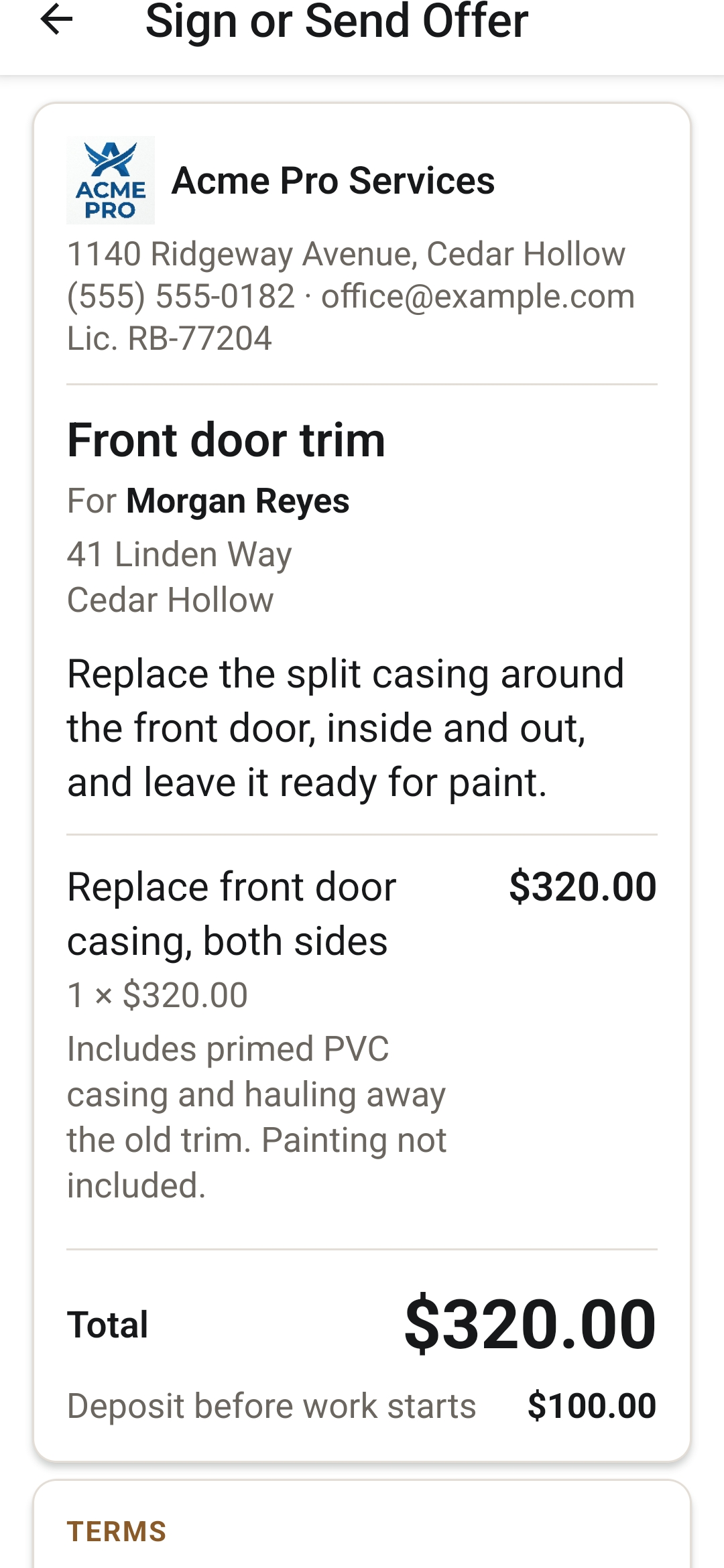
A written offer is most effective when you walk through it together. Go line by line: “We talked about replacing the casing around the front door, inside and out. That’s in. We talked about hauling away the old trim. That’s in this price too, but I can take it out if you’d rather handle it yourself.” Every item gets settled while you’re both standing there, not from memory at the end of the job when it is time to take payment.
The walk-through separates you from those who don’t take the time. The customer sees how you work before you start, and that is how a good reputation is built. In a 2024 Clever Real Estate survey of 1,000 U.S. homeowners, 25% responded that reputation was the most important factor in hiring a contractor, and 23% said experience, both ahead of cost (19%).
What to say
“Let me capture what we talked about on my offer, so we’re both looking at the same thing.”
Walking through it: “Here’s what’s in, and here’s what’s not. Did I miss anything?”
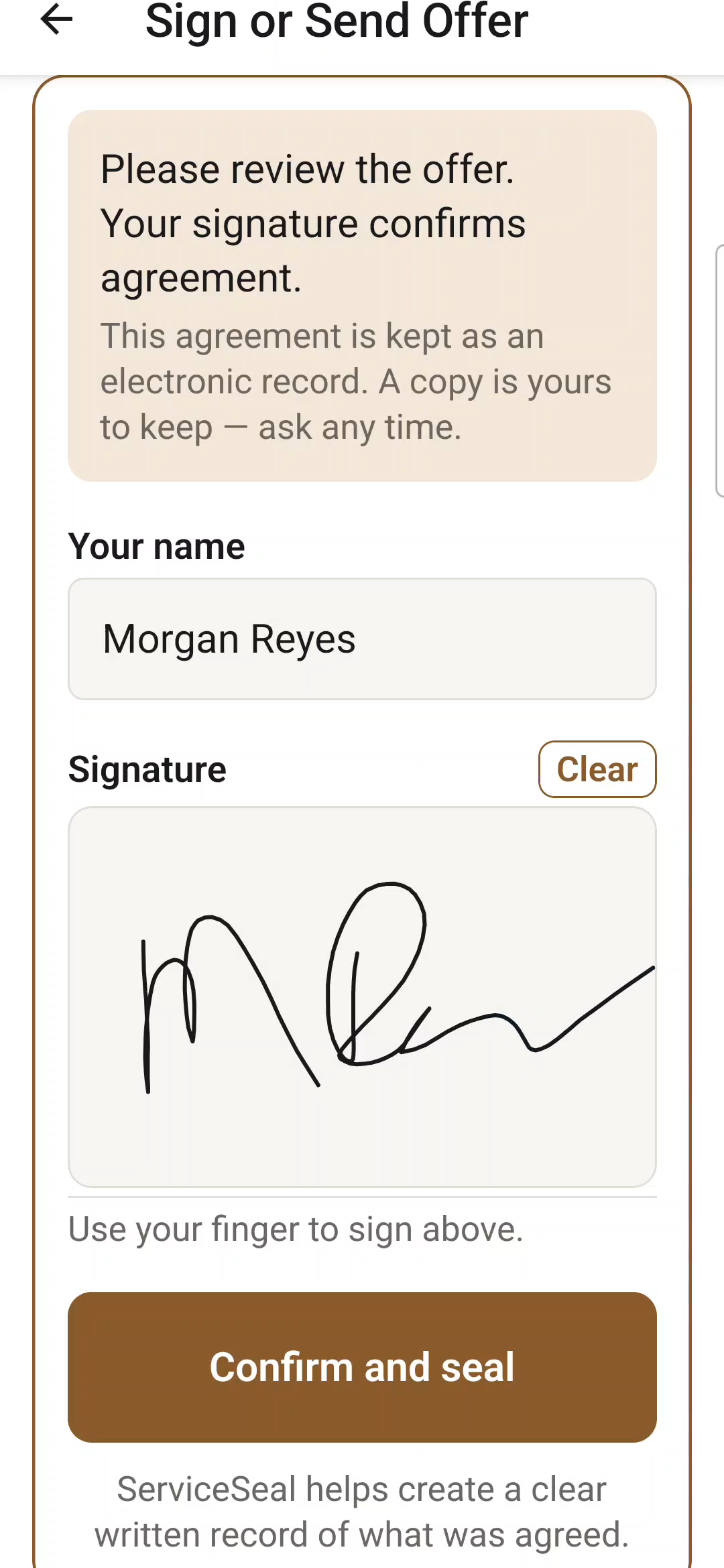
Confirm the agreement: “If it all looks right, you can sign right here, or just text me back a ‘yes.’ Either way, I’ll send you a copy.”
As simple or as detailed as the job
A written offer doesn’t need to be long or formal. For a small scope, two details will do: the work and the price. A bigger job may need more detail: finish, materials, what’s in, what’s out, a deposit, special terms, and so on.
I’ve spent 30 years delivering large, complex programs worth hundreds of millions of dollars, and even with those, the scope of work is tailored to match the complexity of the project. A simple job gets a simple scope, and a complex one gets the detail it needs. You know your business and your customers. Write what the job needs, no more, no less.
To address some common concerns
- “Isn’t a verbal quote/agreement enough?” It has been, and it may be how you built your business. But the customer may remember details differently than you do. Why risk a reputation hit? Put the next one in writing so you stay on the same page.
- “It’ll look like I don’t trust them.” Trust is a two-way street, and the best customers will respect a clear written agreement.
- “Won’t they just shop my price?” They likely will anyway. A written offer shows what your price covers, so they compare your work and your professionalism, not just a number. Confidence and trust can win out over price alone. Good customers will pay for it.
- “What if the job changes once I open it up?” This is where a written agreement shines. Identify risks and assumptions so changes are clear. When there is a change, update the offer, gain agreement, and move forward. It is a great way to avoid the difficult conversations down the road.
- “I don’t have time for paperwork.” Understood. Why add one more thing to the long list of time eaters? It boils down to adding value to your business. If you want to work with good customers, build a reputation that helps you gain more business through referrals, and set up jobs for success, how can you afford not to use written agreements?
- “Will it really bring me more work?” It can. Customers remember the pro who set clear expectations, kept their word, handled changes fairly, and finished the job cleanly. A written agreement can help you deliver what builds the reputation that leads to the next call and the next referral.
How ServiceSeal sets you up for success
The ServiceSeal app was built for the service pro who can see the value in using written agreements. It’s a job agreement tool for the phone in your hand: agree the work, approve changes, and get paid. Our goal is to make the agreement side of your business as professional as the work itself, so every job builds trust.
You can take the steps included in this article right on your phone. Your clear written offer carries your business name and logo, with the work details, the price, what’s included, and what isn’t, as simple or as detailed as the job requires. It introduces you and your work. Walk the customer through it, then get their “yes” signed on the spot, or record it verbally, by text, or by email. If the job changes, add the change and get their “yes” the same way. The change adds to the original agreement, forming a complete record.
You bring the workmanship, judgment, and follow-through. ServiceSeal brings a process to create a clear written record of what was agreed. Try it free on your next job: 21 days, no card needed.
Your handshake built your business. A professional agreement helps you grow it.