You’re finishing the last piece of work when the customer leans in the doorway. “While you’re here, could you do the hall closet too?”
It’s a good moment. They like your work enough to want more of it, and you’re already on site with the tools out. The hard part is agreeing the price. Name a number off the top of your head and you’ll probably shoot low. Say “sure, no problem” and the extra work quietly becomes a favor you never meant to give.
The professional answer? “Let me make sure I have what I need, and I’ll price it.” Then give the customer the price and the new total for the job, get a clear “yes,” and add it to the job’s paperwork. It takes a couple of minutes, and it makes the end of the job the easy part.
Why “while you’re here” is good news
An extra request is a vote of confidence. The customer has watched you work and wants more of it, from you, today. It’s some of the best work you’ll win, as long as you get paid.
It happens everywhere. In a 2026 UK survey of tradespeople, 92% said customers had asked for work beyond the original scope, and 34% said they received no payment for that extra work at all. The same survey found that 62% responded that helping out beyond the job had led to future recommendations.
So the goodwill is real, but the pros who come out ahead keep the goodwill and get paid too. They treat an extra request as a short business conversation: what the work is, what it costs, and a “yes,” before starting the work.
Three good answers to an extra request
Not every request deserves the same answer. Decide which of these fits:
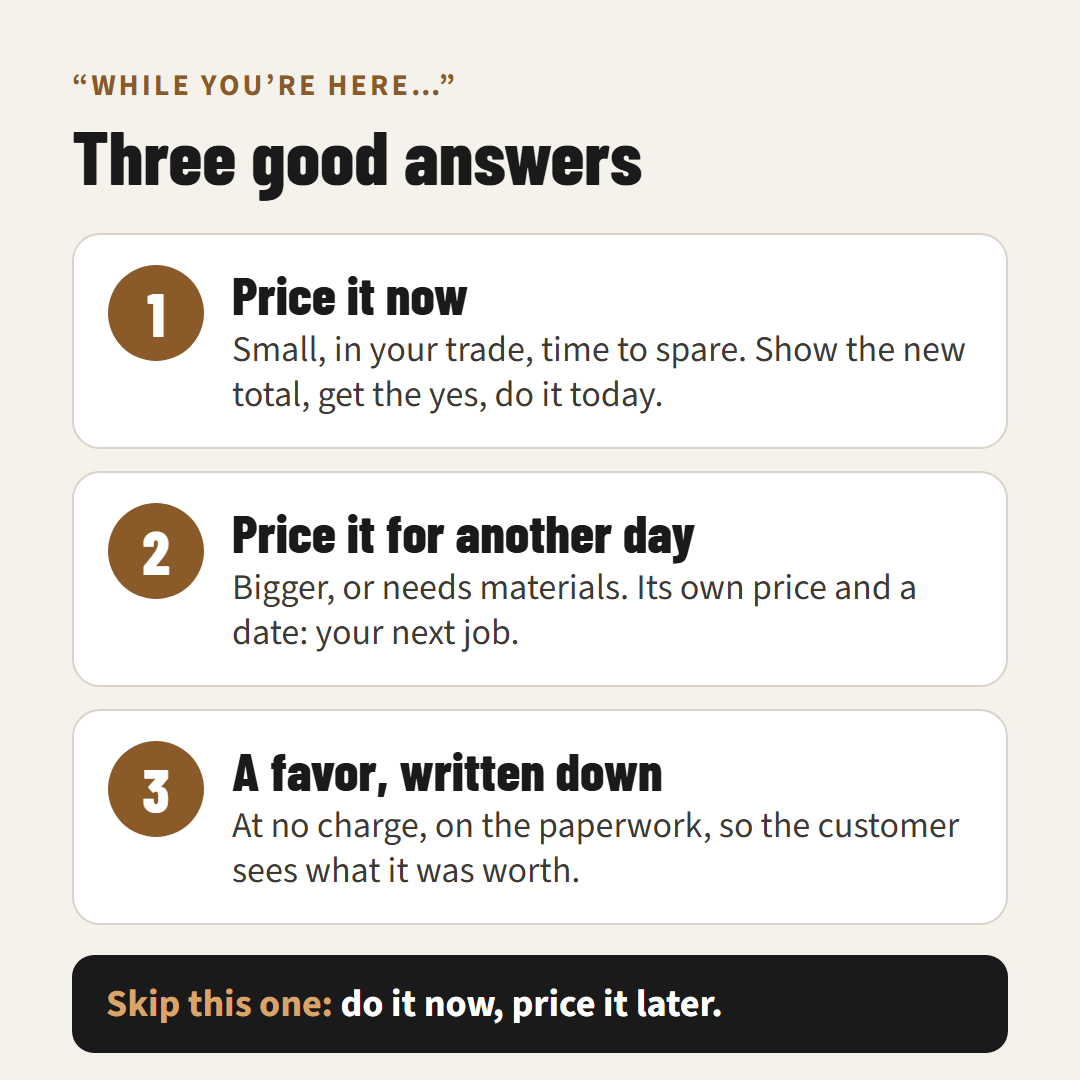
- Price it now. It’s small, it’s in your trade, and you have the time and materials. Price it, show the new total, get the “yes,” and do it today.
- Price it for another day. It’s bigger than the time you have, needs materials you didn’t bring, or is outside what you were booked for. Write it up as its own price and set a date. You’ve just booked your next job.
- Do it as a favor, and write that down too. For a good customer and a five-minute task, a favor can be the right call. Put it on the paperwork at no charge, so the customer sees what you did and what it was worth. A favor they can see builds goodwill. One they never notice is easy to forget.
The risky call: start the work and figure out the price later.
How to price extra work on the spot
1. Get clear on the ask
Know exactly what they want before you name a number, no different than for the original offer.
2. Price it the way you priced the original job
Use the same rates you used for the original work: materials, your time, and any extra setup or cleanup it costs you. Many pros set a minimum for any add-on, so a small request still covers the time it takes. Don’t discount it just because you’re already there. Being there is what makes it convenient for the customer, and convenience has value.
3. Show the new total, not just the extra
“$240 more” is easy to say yes to and easy to forget. “$240 more, which brings the job to $1,630.94 with tax” is a number both of you will remember the same way.
4. Get the “yes” before you start
Bigger contractors call this a change order: the extra work and its price, approved in writing before it starts. On a small job it can be a single line. A signature on the updated job is the clearest “yes” there is. If the customer isn’t home, send the updated price by text or email and wait for the reply before you start. A “sure” called across the yard is the “yes” most likely to be remembered differently at payment time.
What to say
“Let me make sure I have what I need, and I’ll price it.”
For a bigger request: “That’s more than I can squeeze in today. I’ll write it up and we can pick a day.”
For a favor: “That one’s on me. I’ll add it to the paperwork at no charge so you have a record of it.”
Mistakes that cost money
- Pricing it at the end. Once the work is done, any number sounds like a surprise, even a fair one. If the customer feels they’re being gouged, your reputation takes a hit.
- Letting small asks pile up. Five “quick ones” can add up to an afternoon. Price each one, or gather them into one change.
- The invisible favor. Free work nobody wrote down doesn’t get remembered, and free work can become expected by the customer.
- A vague description. “Extra trim” invites a different memory at payment time. “Crown molding in the hall closet, ready for paint” doesn’t.
An example: the hall closet request, handled well
Hannah booked crown molding built up in two pieces, with returns at the doorways: $1,295 before tax. On the second day she asks about the hall closet.
The pro measures it, prices it at $240, and shows her the updated offer right there on the phone: the original work still listed, the closet added as its own change, and the new total of $1,630.94 with tax. She signs on the pro’s phone, and the closet goes on the list for that afternoon.
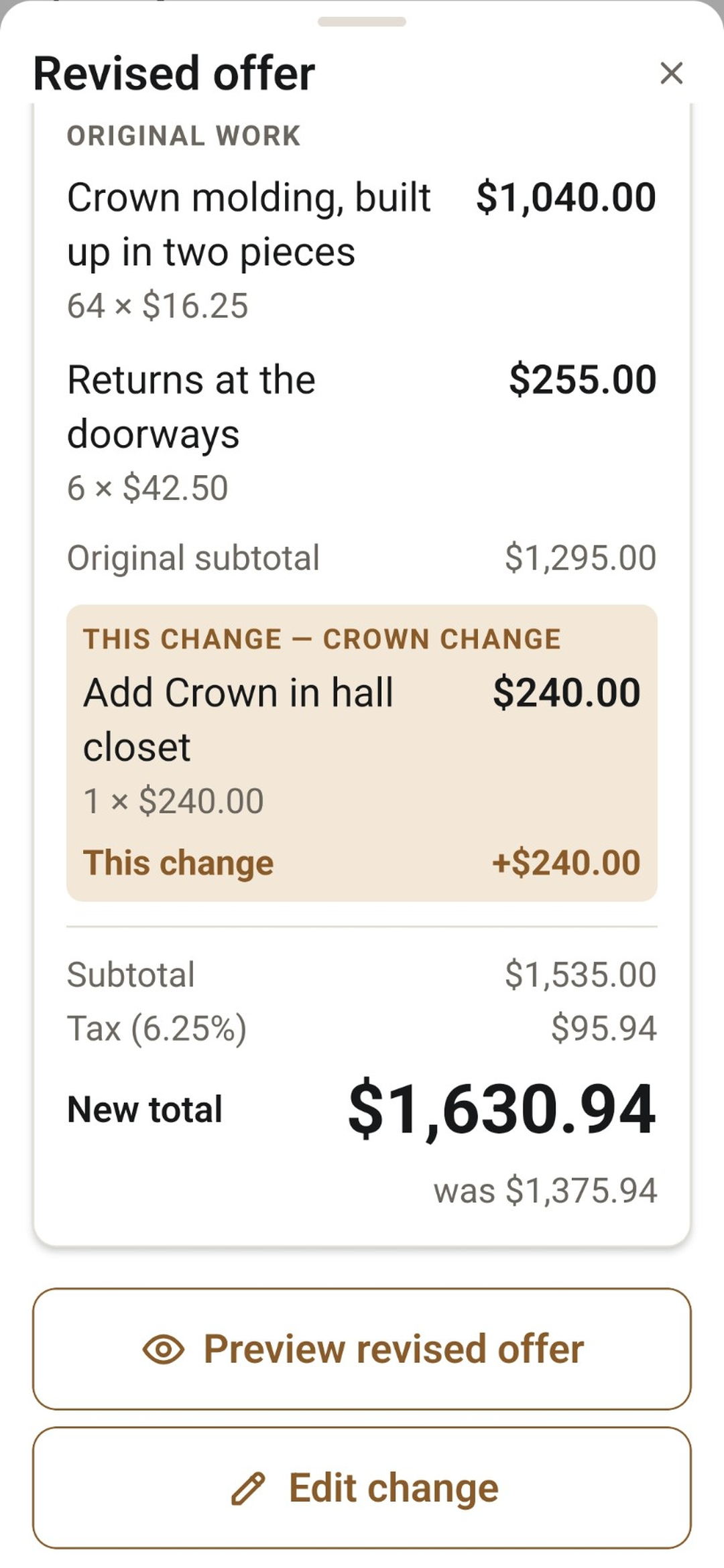
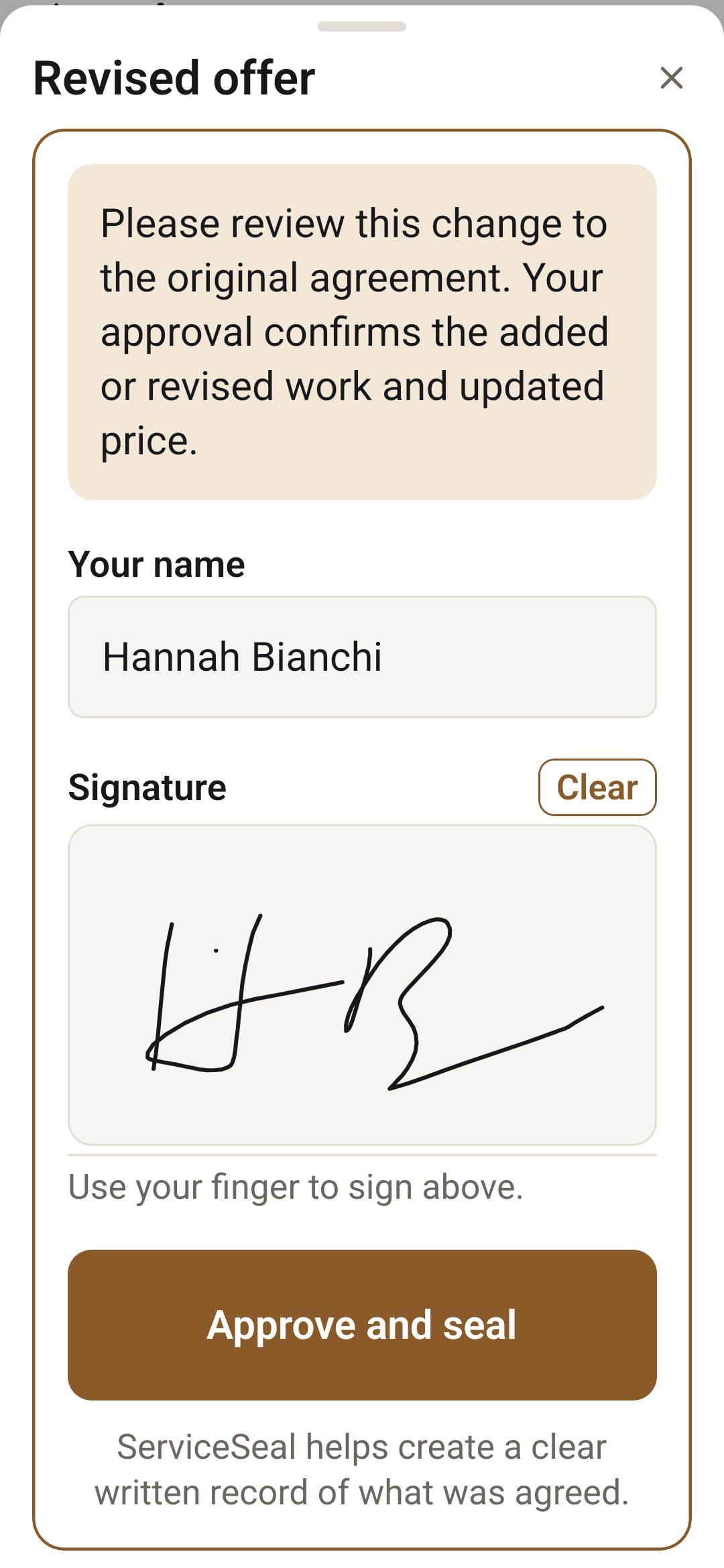
At the end of the job there’s nothing to explain. The final bill matches what Hannah agreed to, line by line, and the hall closet is on it.
A tool that makes it easy
There is a tool that makes it easy to manage written agreements, including “while you’re here” requests. Using the ServiceSeal app, a “while you’re here” request becomes a change to the job you already agreed. Tap Add change, type what the customer asked for and its price (or leave the price blank for a no-charge favor), and the app builds a revised offer: the original work, this change and the new total. The customer signs on your phone, or you can send the revised offer as a PDF. Record the agreement, then finish the job.
Changes are added to the original agreement. When the job is done, the payment request includes the agreed extras.
ServiceSeal helps create a clear written record of what was agreed, so the next time someone says “while you’re here,” you’ll have the tool that can help you not only keep the goodwill, but get paid too.